Is your estate unlike anything else on the Palos Verdes Peninsula? Pricing a one-of-a-kind property in Rolling Hills can feel more like art than science. You want to protect hard‑earned value, respect your privacy, and still reach the right buyers. In the next few minutes, you’ll learn a clear framework to price with precision, even when true comparables are scarce. Let’s dive in.
Why Rolling Hills pricing is different
Rolling Hills is a low‑density, equestrian-friendly city where estates sit on large lots with sweeping ocean or city views. Most homes are custom, and many change hands quietly. That means you face fewer data points, longer gaps between truly similar sales, and more off‑market activity than in typical suburban markets.
Buyer motivation also looks different at the top end. Many buyers value lifestyle, privacy, and views more than price-per-square-foot norms. The result is a thin market where the right pricing approach focuses on your estate’s specific value drivers, not broad averages.
What drives value for unique estates
Acreage and usable land
Land matters. Total parcel size is only part of the story. Usable acreage, flat pads, and the building envelope often drive value more than home square footage.
- What to document: parcel maps, topographic surveys, title reports with easements, and any recorded lot line agreements.
- How it impacts price: more usable land can create premiums for equestrian use, privacy, and future flexibility.
Views and view permanence
Views in Rolling Hills range from Catalina to long coastline and Los Angeles basin panoramas. The quality and permanence of that view affect price.
- What to document: direction and breadth of view, risk of future obstruction, elevation, and view corridors. Capture clear photos and drone footage.
- How to verify permanence: check planning and building records for adjacent parcels and any view easements.
Privacy and security
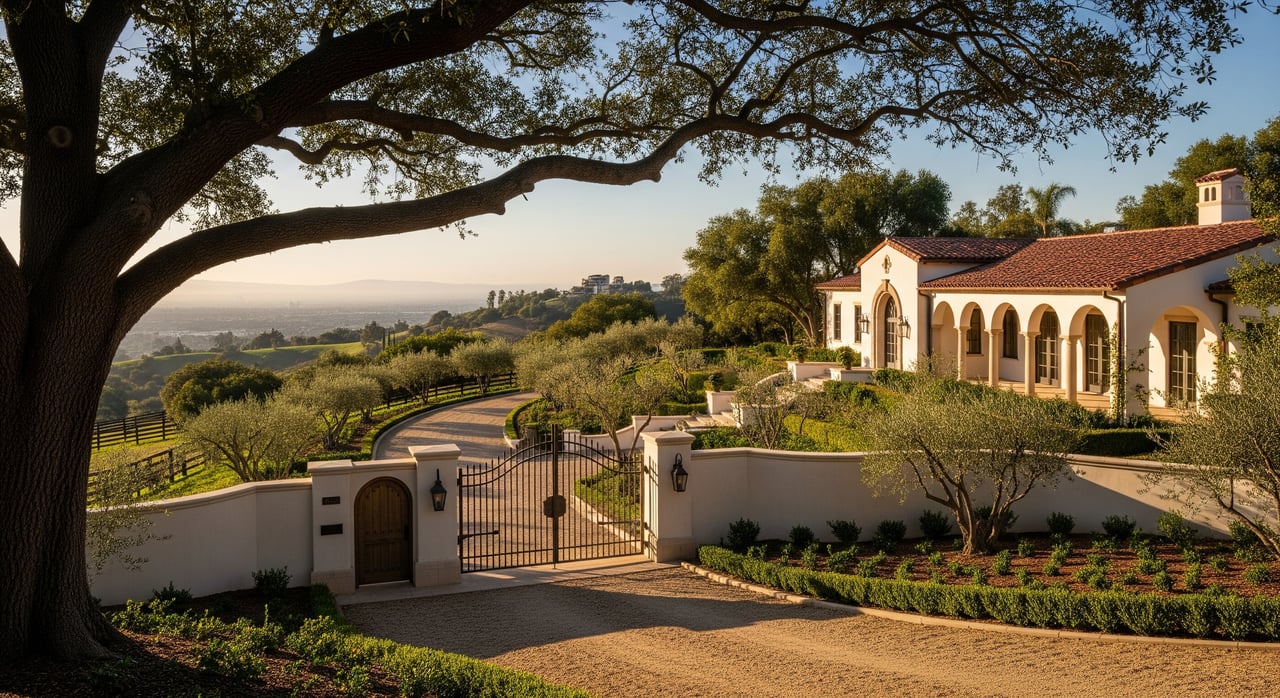
Gated access, long private drives, and generous setbacks shape buyer demand.
- What to document: deeded access points, shared driveways, distance to neighbors, and any HOA or city restrictions.
- Pricing note: elevated privacy often commands a premium, though the buyer pool can be more specific.
Design pedigree and construction quality
Named architects, notable builders, and documented renovations can change your buyer audience and pricing.
- What to document: architect and contractor names, permit history, renovation invoices, and any press or awards.
- Pricing note: recognized design can attract a premium for the right buyers when it is well documented.
Amenities and functional utility
From stables and riding rings to guesthouses, pools, tennis courts, gardens, or staff quarters, amenities matter when they match buyer needs.
- What to document: a full inventory with sizes, dates, and condition details.
- Pricing note: specialty features can boost value with aligned buyers, but over-improvement may narrow the audience.
Legal, environmental, and regulatory factors
Zoning, hillside rules, septic versus sewer, wildfire zones, or protected features can influence price and timing.
- What to document: municipal code references, permits, environmental records, and any restrictions or designations.
- Pricing note: constraints that limit expansion or subdivision can reduce marketable value or the buyer pool.
Title, taxes, and carrying costs
For high-value properties, tax and title details are part of the pricing conversation.
- What to document: assessor records, Prop 13 basis, property tax bills, liens, and any exemptions.
- Pricing note: buyers may factor in reassessment, tax basis transferability, or 1031 timing.
A step-by-step pricing framework
Step 1: Pre‑listing data collection
Build a reliable file before you set a price. Precision starts with documentation.
- Parcel and legal: deed, legal description, easements, CC&Rs, survey, and topography.
- Improvements: plans, permits, certificates of occupancy, renovation invoices, and contractor or architect credentials.
- Utilities and services: septic or sewer status, water source, irrigation systems, wells, and utility easements.
- Visuals: professional photos, drone footage, sunrise and sunset angles, and context shots.
- History: past sale history and tax assessor records.
- Comps: recent and near‑comparable sales, including off‑market intelligence when available.
Step 2: Comparative and non‑comparative analyses
When close comps are limited, expand the lens and triangulate value.
- Expand the comp pool: widen the time window up to 24 months if conditions are stable. Consider nearby areas with similar lot sizes and views, then apply careful adjustments.
- Make structured adjustments: quantify differences in usable acreage, view quality, improvement age and condition, and architectural pedigree. Use documented costs when possible.
- Use multiple approaches: compare adjusted comps, estimate replacement cost with depreciation, and run a land‑residual analysis when land value dominates.
- Get expert opinions: obtain at least one appraisal from an appraiser with luxury and multi‑acre experience, and request 2 to 3 Broker Opinions of Value from top local luxury brokers for market sentiment.
Step 3: Market testing and list strategy
Validate your target price before going broad.
- Staged exposure: begin with discreet off‑market or pocket outreach to qualified brokers and buyers. Follow with a soft launch to targeted lists, then full MLS exposure based on feedback.
- Initial list price: anchor at a realistic top‑end figure supported by your analysis. Pair with flexible terms where appropriate, such as preferred timing or thoughtful contingency review.
- Track micro‑metrics: showings per week, qualitative feedback, days on market, early offers, and patterns in contingencies. Use these to calibrate quickly.
Step 4: Adjust with discipline
High-end buyers often move deliberately, but the market still gives signals.
- Early silence: if qualified traffic is low, revisit price, presentation, or exposure strategy.
- Repeated objections: if buyers echo the same concern, quantify it and adjust.
- Comp shock: when a strong new comp closes, recheck your range and move with purpose if needed.
Reading the market in real time
A thin luxury market requires attention to small but meaningful signals.
- Track new listings and pendings in the luxury tier and note time on market.
- Monitor withdrawn or expired listings to see where buyers rejected price levels.
- Watch for price reductions, escalation clauses, multiple offers, and contingent activity.
- Stay aware of interest rates, liquidity trends among high‑net‑worth buyers, and local policy changes that may affect timing or demand.
Avoid common pricing mistakes
- Leaning on price per square foot alone. For estates where land or views dominate, PSF can mislead.
- Overvaluing amenities that do not match the likely buyer. Focus on alignment, not absolute spend.
- Ignoring regulatory constraints. Hillside rules, septic, or wildfire mitigation can affect price and timing.
- Skipping market testing. Discreet exposure can validate your price without burning days on market.
- Waiting too long to adjust. In a thin market, agile adjustments protect momentum and net proceeds.
How Keith Kelley positions your estate
You deserve a senior-level, boutique approach that still delivers enterprise-caliber reach. Keith Kelley Real Estate pairs a named principal’s direct oversight with a marketing‑first listing process and global distribution through its Strand Hill affiliation and Forbes Global Properties syndication. You get valuation rigor, discreet pre‑market exposure where appropriate, and polished storytelling that highlights the attributes buyers in Rolling Hills value most.
- Senior‑agent counsel: hands‑on pricing strategy informed by lending and negotiation expertise.
- Evidence‑based valuation: comprehensive document review, multi‑method analysis, and coordination with experienced appraisers when needed.
- Strategic distribution: editorial‑quality visuals, targeted outreach, and selective off‑market testing to validate the number before broad exposure.
If you are considering a sale, schedule a Private Consultation with Keith Kelley to discuss a precision pricing plan tailored to your estate.
FAQs
How much of my Rolling Hills estate’s value is land versus improvements?
- For larger parcels, land often represents the majority of value. For smaller estates with significant upgrades, improvements can dominate. A land‑residual analysis helps isolate each component.
What if there are no close comparable sales for my property?
- Broaden the time window and geographic radius to find near‑comps, apply transparent adjustments, add replacement cost and land‑residual analysis, and use discreet market testing to confirm buyer response.
Do named architects reliably add value in Rolling Hills?
- They can, especially with documented press, awards, or regional recognition. The premium depends on buyer tastes and the strength of the home’s design and condition.
Should I price low to spark a bidding war on a unique estate?
- That can work for broadly appealing homes, but narrowly targeted trophy estates usually perform better with discreet, precision pricing and selective exposure that verifies the market’s top range.
How do I prove my ocean or city view will remain unobstructed?
- Document current view corridors with photos and drone footage, then check planning and permit records for adjacent parcels. A recorded view easement, when present, can increase certainty.
Is an off‑market sale a good idea in Rolling Hills?
- Off‑market or pocket exposure is common for privacy and early price validation. It can be a smart first step before a wider launch, especially for highly unique estates.