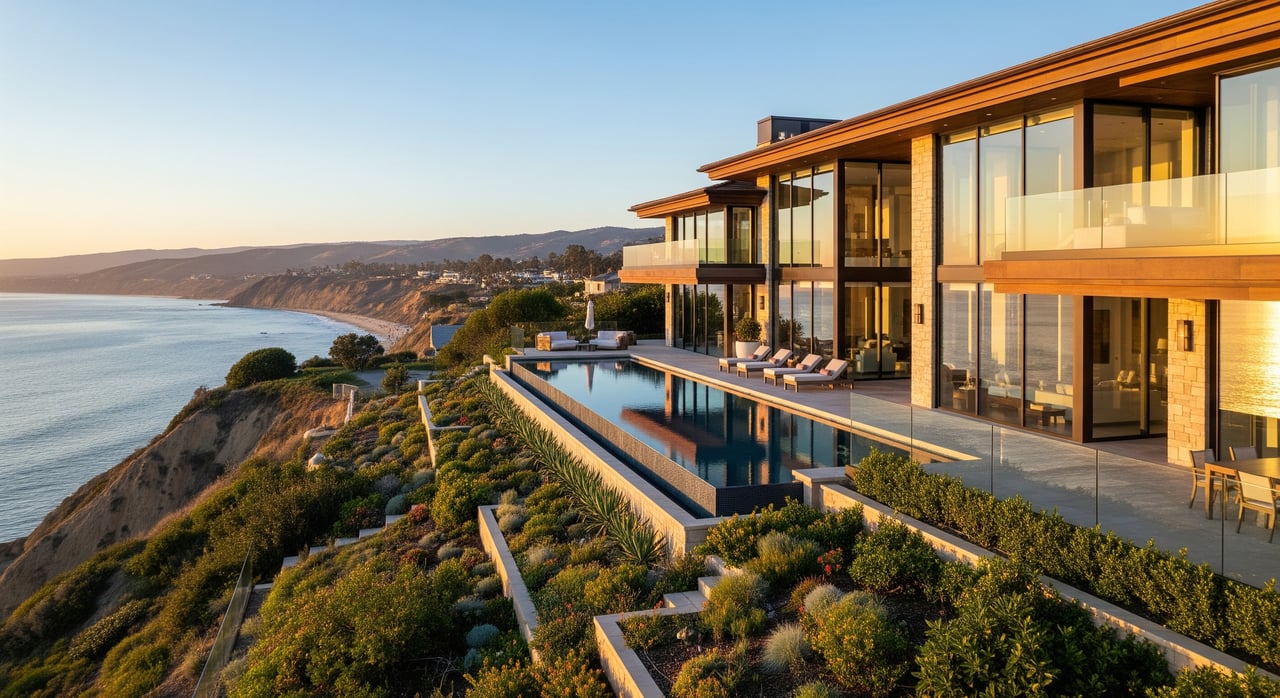
Shopping for an ocean-view home in Rancho Palos Verdes and hearing terms like “jumbo,” “portfolio,” and “reserves”? You are not alone. Many luxury buyers here need financing that sits above standard limits, and the rules can feel different from a typical mortgage. In this guide you will learn what makes a loan jumbo, how lenders evaluate you and the property, what drives rates, and how to compete in a tight coastal market. Let’s dive in.
What a jumbo loan is
A jumbo loan is any mortgage amount that exceeds the conforming loan limit set by the Federal Housing Finance Agency. Conforming loans meet Fannie Mae and Freddie Mac guidelines. Amounts above that threshold are considered jumbo and are underwritten and priced differently.
Conforming limits change every year. In high-cost areas like greater Los Angeles, purchase prices often exceed those limits. Because Rancho Palos Verdes features coastal bluffs, hillside estates, and ocean-view homes, many buyers here use jumbo financing.
Why jumbo loans are common in RPV
Rancho Palos Verdes is a high-value coastal submarket with many single-family homes on larger lots and with premium views. That level of property often prices above conforming thresholds, so jumbo or alternative financing becomes the norm.
Inventory for top-tier listings can be limited. When the right home hits the market, you may face multiple offers. Coming in with a strong jumbo pre-approval and clean terms can make the difference.
How jumbo underwriting works
Jumbo loans are often portfolio products. That means guidelines and pricing vary by lender. Expect more documentation, tighter ratios, and higher reserve requirements than a typical conforming loan.
Credit and history
Lenders generally want strong credit profiles for best pricing.
- Preferred scores are in the mid-700s and above for top terms.
- Mid-to-high 600s may be considered with compensating factors, but pricing and approval can be more difficult.
- Clean histories matter. Recent bankruptcies or foreclosures typically require longer seasoning and stronger offsets.
Income documentation
You will need full documentation.
- Expect recent pay stubs, W-2s, and two years of tax returns.
- Self-employed buyers commonly provide two years of business returns, K-1s or 1099s, and sometimes year-to-date P&L statements.
- Some lenders offer non-QM or bank-statement programs for complex income profiles.
Debt-to-income ratio
DTI caps are often stricter than conforming programs.
- Typical acceptable ranges are mid-30s to low-40 percent, depending on strength of profile.
- Exceptions may be possible for very strong borrowers with large liquid reserves or low housing costs.
Down payment and LTV
Your down payment is a major pricing lever.
- A 20 percent down payment is a common baseline for purchase jumbos.
- Some programs allow 10 to 15 percent down for very strong borrowers.
- Pricing improves as loan-to-value decreases.
Cash reserves and assets
Be ready to document liquidity.
- Many jumbo programs require 6 to 12 months of total mortgage payments in reserves. Larger loans or unique properties may require more.
- Lenders verify bank, investment, and retirement accounts and will ask for explanations of large deposits.
Appraisals for coastal and hillside homes
Valuing unique properties can take longer.
- RPV homes may have few comparable sales, special amenities, or recent renovations that require a seasoned luxury appraiser.
- For bluffs or steep slopes, lenders may ask for geotechnical or foundation reports to confirm stability.
- A second appraisal or review can be required when comps are limited.
Title, HOA, and occupancy
Lenders review any factor that affects marketability.
- Condos and gated communities may face extra scrutiny on HOA finances, insurance, and litigation.
- Title reports, easements, and coastal or local permitting issues are reviewed. Unpermitted work or open code matters can slow or block a loan.
Rates, products, and strategies
Jumbo rates are not set by Fannie or Freddie, so pricing varies across lenders and market cycles. The stronger your profile, the better your options.
What drives jumbo rates
Several factors influence your interest rate and fees:
- Credit score, assets, and DTI
- Loan-to-value and combined LTV
- Loan amount and product type
- Purpose of the loan, such as purchase, rate-and-term refinance, or cash-out
- Overall market conditions and investor appetite for jumbo loans
Strong profiles can secure very competitive jumbo pricing. Weaker profiles may see a larger spread versus conforming rates.
Common jumbo products
You can align the structure with your goals.
- High-balance conforming options may exist in some high-cost counties and can bridge part of the gap between conforming and jumbo, depending on the year’s limits.
- Fixed-rate jumbos in 15-, 20-, or 30-year terms.
- Adjustable-rate jumbos such as 5/1, 7/1, or 10/1, often used by buyers who plan to sell or refinance.
- Portfolio loans with flexible underwriting for unique income or property situations.
- Non-QM programs that consider bank statements or asset depletion for qualifying.
- Interest-only features or temporary buydowns to improve near-term cash flow.
Ways to improve your terms and your offer
In a competitive RPV setting, small moves matter.
- Increase your down payment to reduce LTV and potentially lower pricing.
- Document robust cash reserves.
- Secure a strong pre-approval or, ideally, an underwritten approval from a lender experienced with local luxury transactions.
- If timing the sale of another property, consider a bridge or portfolio solution.
- Shorten appraisal or inspection timelines only if your team has a clear plan and you understand the risks.
- Use larger earnest money or strategic escrow holdbacks when appropriate and advised by your agent and counsel.
Local property and insurance factors
Coastal and hillside attributes in Rancho Palos Verdes can add steps to financing and due diligence. Planning ahead reduces surprises.
Coastal and hillside risks
Unique sites can require more analysis.
- Bluff-top and steep-slope properties may trigger geotechnical or soils studies and foundation inspections.
- Appraisers may struggle with sparse comps, which can extend timelines or result in conservative valuations.
- Shoreline protection or hillside remediation can carry higher costs that factor into the appraisal and lender conditions.
Permitting and coastal oversight
Proximity to the ocean can bring extra layers of review.
- Projects near the coast may require approvals from the California Coastal Commission and local agencies.
- Lenders review permits and title for open issues. Unpermitted additions or active code enforcement can delay or prevent approval.
Insurance considerations
Insurance affects both risk and budget.
- Hazard insurance is required. If a property is in a designated flood zone, a separate flood policy is mandatory.
- Earthquake coverage is widely recommended in California and may be required for certain loans or properties.
- In higher-risk areas for wildfire, brush clearance and insurance underwriting can affect availability and cost.
- Specialty coastal coverage for wind or wave-related risks may carry higher premiums.
Taxes and assessments
Your total monthly cost drives qualification.
- LA County property taxes include a base rate plus local assessments and special taxes.
- Mello-Roos and other special assessments add to monthly obligations and are considered in your DTI.
- Ask about any pending community assessments, such as seismic or infrastructure projects.
Timeline and process in RPV
Expect a slightly longer path than a typical conforming loan, especially for unique properties.
Pre-approval
Start early, before touring in earnest.
- Obtain a jumbo pre-approval or a full underwritten approval to show sellers you are well qualified.
- Portfolio and non-QM lenders may need extra time to review complex files.
Appraisal and inspections
Book specialists as soon as you open escrow.
- Luxury coastal appraisers often have longer lead times.
- Geotechnical, structural, and specialty inspections add days but provide essential clarity.
Closing window
Plan for realistic timelines.
- Many jumbo purchases close in 30 to 45 days from contract acceptance.
- Add buffer if HOA review, permits, title issues, or insurance procurement are involved.
Quick documentation checklist
Be ready to provide:
- Recent credit report and scores
- Two years of tax returns and W-2s, or business returns if self-employed
- Recent pay stubs and 60 to 90 days of bank statements
- Asset and investment statements for down payment and reserves
- A list of current debts and obligations
- Explanations for large deposits or transfers
- Property-specific items after you are in contract: appraisal, HOA documents, termite, and any required geotechnical or structural reports
Smart questions to ask your lender and agent
Use these to set expectations and avoid surprises:
- Is my approval fully underwritten or only a pre-qualification based on credit and stated income?
- What documentation do you require for income, assets, and reserves? Do you offer asset-depletion or bank-statement options?
- Do you have experience appraising and underwriting coastal and hillside properties in Rancho Palos Verdes?
- What are your reserve requirements and maximum LTV for purchases and for cash-out refinances?
- Do you have any overlays beyond standard guidelines that could affect my approval?
- What are the biggest timeline risks in my file, including appraisal, geotechnical, HOA, and insurance items?
Work with a local advisor who speaks finance
In Rancho Palos Verdes, the right financing strategy can win the home. A senior agent who understands jumbo underwriting, local appraisal dynamics, and coastal due diligence helps you position your offer and protect your interests. With boutique representation and rigorous deal structuring, you can move faster, negotiate smarter, and close with confidence.
If you are preparing to buy on the Peninsula, let’s align your financing plan with your search. Schedule a Private Consultation with Keith Kelley to get a tailored jumbo strategy for RPV.
FAQs
What is considered a jumbo loan amount in Rancho Palos Verdes?
- Any loan amount above the current FHFA conforming limit is considered jumbo. Limits change annually, so confirm the latest figure for Los Angeles County with your lender.
How much down payment do I need for a jumbo loan in Los Angeles County?
- A 20 percent down payment is a common baseline. Some strong borrowers may qualify at 10 to 15 percent down, but terms and availability vary by lender.
Are appraisals harder for ocean-view or hillside homes in RPV?
- Yes, unique luxury properties often have fewer comparable sales. Lenders may require seasoned appraisers, longer timelines, and sometimes a second appraisal or review.
Will I need earthquake or flood insurance for a jumbo loan in RPV?
- Hazard insurance is required. Flood insurance is mandatory for properties in designated flood zones. Earthquake coverage is widely recommended in California and may be required for certain loans or properties.
How long does a jumbo loan closing take in Rancho Palos Verdes?
- Many jumbo purchases close in 30 to 45 days. Allow extra time for coastal permitting reviews, HOA documentation, specialized inspections, or insurance procurement.
How can I make a competitive offer with jumbo financing in a tight market?
- Get a fully underwritten approval, increase your down payment or reserves, tighten timelines only when advised, and coordinate insurance early to keep the file clean and fast.